


It’s becoming hard to describe Canada as anything else but a tragedy of our own making. Increasingly, we resemble Jerusalem in the latter days of her apostasy — once a beacon of justice and peace, now a centre of idolatry, bloodshed, and universal mockery (Ezekiel 22:1-5). The root of this ruin isn’t solely the fault of any particular party, immigration policy, or economic strategy. Rather, it has come about from our exchanging the supremacy of God for the illusory and impotent supremacy of man.
It is this cosmic treachery that is ultimately responsible for the erosion of our nation. Only as a nation acknowledges the supremacy of God can there exist a shared bank of values from which to base a shared, formal law.
A united nation must have shared basis for law
By “law,” I mean, broadly, the duties and penalties every citizen is responsible for and subject to. Where there are no shared duties or penalties, there can be no nation; there can only be individuals, families, and tribes. It is only the formal, shared commitment to a set of values, enshrined in law, that can unite otherwise disparate persons and groups into what we know as a nation. This should be fairly obvious. If certain groups think it is morally permissible to steal from and/or kill their neighbours, and other groups believe such actions to be unlawful (and thus subject to penalties), these groups cannot, in any meaningful sense, form a nation. To even attempt such a thing would be to render the word “nation” meaningless.
The concept of a nation that includes formal, shared obligations was once a view held by all Canadians. Our introductory letter to new citizens once emphasized this reality: “Your citizenship carries with it the obligation to live in peaceful brotherhood with your fellow-Canadians and to do your part, to the best of your ability, to preserve Canadian ideals and institutions.”1 Citizenship and shared obligations are inseparable. You cannot have one without the other.
If this is the case, a critical question follows: What is the basis of these obligations? The only rational answer is the true and living God. This isn’t to say that all nations presently acknowledge God as the basis for law. It’s to say that all other bases for law are ultimately only assertions, being that they lack an objective grounding.
Note the claim is not that, as Christians, we simply think our way is best — as if we were just one of many special interest groups vying for influence. Rather, it is that the triune God of Scripture is the only justifiable authority to appeal to in establishing laws, and that all other appeals to authority are false, arbitrary and unjustifiable. In sum:
A shared and formal commitment to a particular set of laws is a necessary component of any nation.
God is the only justifiable source and standard of said laws.
What follows are some necessary biblical principles we must maintain as we consider the nature of a nation, its laws, and its duty to God.
Laws reflects values
A nation’s laws inevitably reflect its values — what things it considers to be good or evil. In the past, Canadian society valued the dignity of the individual. This principle is rooted in the reality that all individuals are created in the image and likeness of God (Gen 1:27). Thus, we instituted laws which upheld the value of the individual and punished those who sought to deface that value. Murder, for example, is an assault on human dignity and the image of God and ought to be punished accordingly (Gen 9:6).
It is no surprise that as the value of human life has dissipated in our society, so too have the formal laws protecting it — to the point where we now tolerate the murder of innocents on a scale, and with a kind of ghoulish casualness, that would once have been unthinkable. Such laws (or lack thereof) surrounding abortion and MAiD ultimately reflect a society that has lost all value for human life.
As the Creator, God alone has the authority and ability to define what good is — and by “good” we mean that which functions according to its created purpose. We read repeatedly in the opening pages of Genesis that God looked at the world He made and said it was “good.” In other words, it was functioning the way it was supposed to. This helps explain why the only thing described as not good in the pre-fall world was that Adam was alone (Gen 2:18). Again, this corroborates the idea that “good” is characterized by that which fulfills its God-given duty.
Adam could not fulfill his responsibilities without a helper, which suggests there is an inherent purpose, and therefore value, to all created reality.
The supremacy of God or the supremacy of man
Our own charter begins with the recognition of God’s supremacy: “Whereas Canada is founded upon principles that recognize the supremacy of God and the rule of law.”2 All politics can be boiled down to how we answer the following question: Will God or man be supreme?
If the world was created by God (Genesis 1-2), then God alone is qulified to determine what is true. Thus, our role as creatures isn’t to define reality, but to discover it. It doesn’t matter what letters we have in front of our name or how many of our fellow creatures approve of what we’re doing: we cannot alter or create reality. Any attempt to do so is simply a manifestation of our own vanity — the original source of our corruption.
As only God made and ordered the world, our laws can only be called “good” to the extent that they reflect that original design.
At the suggestion that they abdicate the throne, devotees of the secular humanist religion might revolt. But might I humbly suggest that, as we inhabit a time in history known as “clown world,” we should really start reconsidering the wisdom of letting the lunatics run the asylum. We gave man’s supremacy a chance. But instead of the flourishing land of freedom we were promised, we managed to transform one of the most prosperous and peaceful nations in world history into the nearly-failed State we inhabit today.
The who shapes the how
A society that recognizes the supremacy of God will be characterized by reason, a desire to be guided by objective principles, and an impulse towards persuasion (as opposed to coercion). Only as we recognize the supremacy of God and His word are we able to recognize reality; that is, are we able to see what’s true.
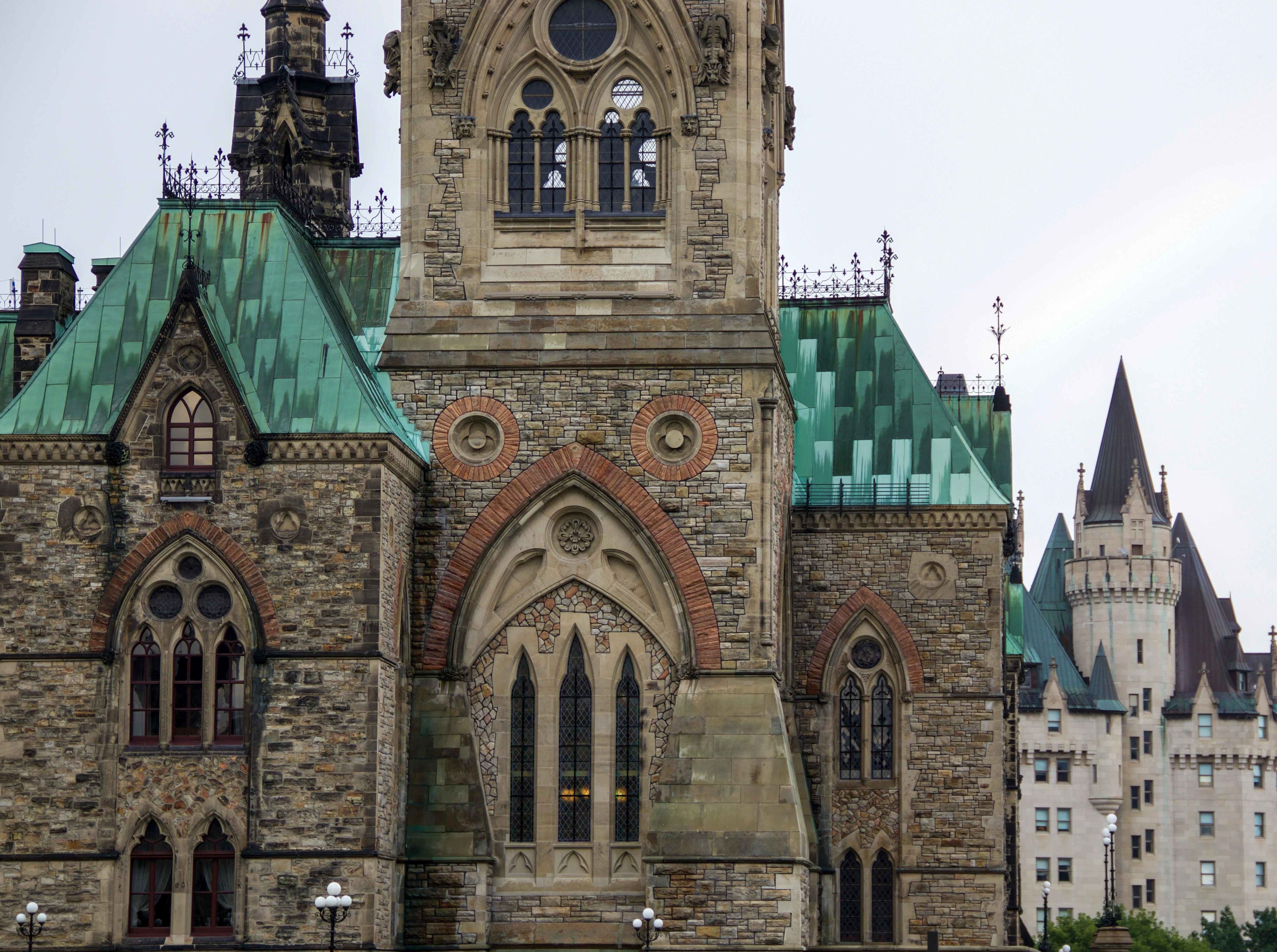
It is these fundamental principles that our House of Commons, as an institution, was built upon.
It is perfectly consistent with our forsaking of God that this same House has now become little more than a marketplace of lies. Where man is supreme, debate, reason, and persuasion become irrelevant. Where man is supreme, we are left only with the futile task of attempting to establish values through law. Consider the stream of recent progressive legislation (environmental agendas, euthanasia, reconciliation initiatives, etc.) — virtually none of it has been established by appeals to reason or objective value. This is because the purpose is no longer to uphold defensible values but to impose otherwise indefensible positions.
It is perfectly consistent for a society that rejects the authority of God to view the law as a means of coercing people into compliance.
The Supremacy of God upholds the rule of law and limits human authority
The defining feature of the Christian West was once the rule of law, which necessarily places limits on human authority. As we have already seen, the charter introduces the supremacy of God as the necessary precondition of the rights and freedoms enshrined into law. These principles are grounded in the reality of God’s absolute authority as divine Law Giver and man’s unique identity as a creature.
It is the assertion of man’s supremacy that has resulted in the various destructive philosophies we see today. Among the worst of these are moral relativism, secularism, and multiculturalism.
Moral relativism is a fraudulent ideology because nobody actually believes morality is relative. Even its fundamental claim that “morality is not objective” is itself an objective moral claim as well as a flaming contradiction. To demand that “You can’t say you’re right” is really to demand that “You can’t say I’m wrong.” Although this ideology often passes for humility, it is actually the opposite. The contemporary iteration of relativism as a so-called “tolerant” philosophy is merely a hypocritical pretext to rule out all absolute truth claims. As everyone should recognize by now, the adoption of moral relativism in education, media, and law has not lead to a more tolerant, peaceful society.
Secularism undermines the values and laws of a nation by denying the only objective basis by which to enforce them. By removing God as the basis for morality, the secularists remove the only authoritative basis by which such a thing can exist. It isn’t that a secular society ceases to make moral claims; it is that it lacks all basis by which to make them.
Multiculturalism undermines nations by assaulting its shared basis of law. If, as has been demonstrated, a nation can only exist while there is shared commitment to a particular set of values, then what we must acknowledge is that the goal of multiculturalism is the destruction of nations. Culture cannot simply be reduced to certain preferences for food or architecture. Rather, culture is the summation of its values, traditions, and laws. For a nation to have a shared culture, it must agree on those shared values which form the basis of its shared laws, which ultimately form its national identity.
Conclusion
I began by noting the tragic trajectory of Canada. But I must be equally clear that the Canada project need not end in ruin. God didn’t create the world for tragedy but for redemption. However, this redemption involves the reordering of all things around the supremacy of the Son (Col 1:18), who rose from the dead to triumph over a world hell-bent on ruling itself.
And He offers life to all who would surrender.
We cannot flourish as individuals, families, and nations while we reject the supremacy of God, seeking instead to “do what is right in our own eyes” (Judges 21:25). Such a path only leads to misery and death, as we are fast finding out. If only we would “humble ourselves, and pray and seek His face and turn from our wicked ways, then He will hear from heaven and will forgive us our sin and heal our land.’ (2 Chronicles 7:14).
May God call us back to him.
Letter from former MP, federal cabinet minister, and briefly Quebec Superior Court Justice Guy Favreau.
So True!!
Praying for revival.
Great article! The Bible says in order to serve God and to grow , not only as a believer in Jesus Christ and all He is, but as a human He created to be used for what He created us to be. We cannot build on a weak foundation and survive, grow and be strong! Our foundation must be in the Word of God , that is the only foundation, built on the Rock of Ages. If God, His morals and values are followed every country would be strong and solid. One day, Christ will rule such a world! For now, we pray for boldness to spread the gospel of Jesus Christ and stand for morals and truth regardless of the opposition! God bless Canada!🇨🇦