


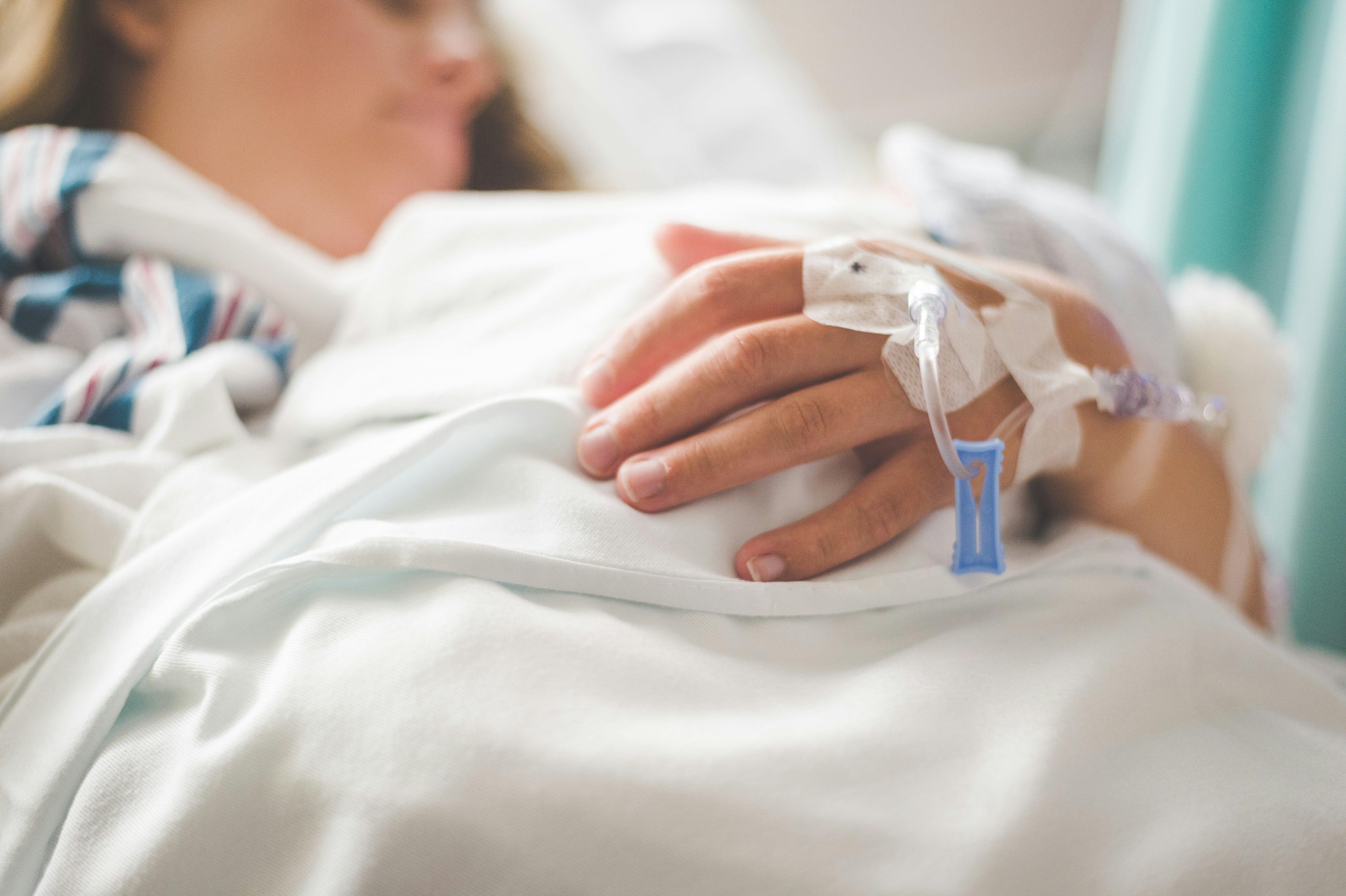
Several weeks ago our family embarked on what I’ll call a difficult season. I’ll spare you the details, but suffice it to say it has involved sustained acquaintance with medical-grade vinyl, rabid equipment alarms, and that particular shade of jaundiced yellow universally favoured by hospital custodial teams.
While too early in the process to pretend I have any special wisdom or advice to share, the Scriptures note that no temptation overtakes us except for those that are common to everyone. Since seasons of crisis are no exception, I thought I’d share some particular temptations I’ve already noticed scratching at the windows and howling down the chimney. Perhaps there will be some extension of application to others who find themselves in similar circumstances.
Resorting to cheap therapy
The hardest moments in life are those where you feel least in control. I say “feel” because the reality is we’re never really in control. Rogue cells in the body, rogue drivers on the road, rogue powers on the geopolitical stage; these are just a few examples of things we can’t predict or really do anything about. When unexpected things happen, our illusions of control rapidly unravel and all kinds of symptoms begin to emerge — anger, irritability, and an almost-murderous self-protectionism.
In light of these dangers, we can go one of two ways. We can flee to the Lord, who is a refuge for those who trust in him (Psalm 46). Or we can flee to any one of the endless cheap, benumbing comforts the world offers.
Sin is always at its most potent when it least looks like sin. During moments of crisis, sin eagerly disguises itself as reasonable therapy. “You can’t expect me to be patient at a time like this.” “You can’t expect me to control my emotions at a time like this.” “You can’t expect me not to overeat or indulge in mindless media consumption in a time like this.” Suddenly everything becomes permissible. Worse, certain “miserable comforters” will gather around and endorse such responses as entirely justified and reasonable.
And so if we’re not careful — if we’re not on our guard — a season where we are most in need of fellowship with God, we are poised furthest away from it. When it is most crucial that we make wise decisions, we are the furthest away from wisdom. By these means Satan most efficiently destroys both comfort and comforter.
All treatment, ALL THE TIME
As strange as it sounds, there are certain lonely individuals who wait their entire lives for a significant diagnosis. Suddenly everyone is asking how they’re doing, what treatments they’re undergoing, or the latest updates regarding their condition. Not only this but they suddenly find unprecedented opportunities to endlessly talk about themselves.
But as I was recently reminded, spiritually-healthy saints don’t actually want to talk about themselves, much less about their “condition.” They would rather not stare into the bleak void of the unknown or discuss various pill protocols and worst-case scenarios. They genuinely want to hear what other people are doing. They want to talk about other things. They want to help and encourage the church. They want to share the reason for the hope that is in them. They realize that attempting to exegete the future is not only futile, it also injects a kind of prevailing moroseness into everything.
Don’t assume that sick people, especially sick Christians, just want to talk about their sickness. They probably don’t. The spiritually-healthy Christian “is not afraid of bad news; his heart is firm, trusting in the Lord.”
Confusing legitimate responsibility with omniscience
The looming specter of disease inspires all kinds of mania in its participants. At least it does in me. Those who were never interested in such things before suddenly become ravenous for any information or insight that might give them an edge. And don’t get me wrong, gathering information and doing one’s own research, especially in the midst of a socialist health system that has no moral qualms with murdering the young or elderly, is a responsible thing to do.
But if one isn’t careful, it is easy to unconsciously transpose oneself into “God-mode” — where those under your care will die apart from your minute-by-minute intervention. And then at some point the inevitable moment comes: where one promising study seems to question, or even contradict, some other study you’d just been researching. Where you suddenly stumble onto an entirely new field of research you didn’t even know existed. It is easy to become paralyzed at the sheer volume of things one doesn’t know.
At these times, it is important to remember we are not omniscient; nor are the best doctors or scientists. We do what we can. We have the conversations we need to have, and do the research we need to do. But then we commit our soul to God, and refuse to spend the entire evening second-guessing everything we’d already decided earlier in the day. There will never not be a shadow of doubt. There will never be 100% certainty about any course of action. There will never not be the risk of some updated study four months from now completely altering the information we currently have.
At a certain point you have to act, sometimes you have to act on the fly, without all the information. That is okay. That is actually how God has designed things. The good news is that he knows our frame. Really, the most important thing to do — whether you’re the one in the hospital bed or waiting nearby — is to start each new day of unknowns with prayer for wisdom. It is amazing how the maintenance of such a simple rythym can transform the most dark and chaotic situations into a well-lit path.
Thank you so much for putting your thoughts on this out to us so succinctly. It has become so apparent to us as we navigate the ' Health Establishment" just how we need ,so desperately, to Trust in the Lord through the moments. Sometimes there is "sheer frustration" in dealing with those who seem so far removed from ourselves or our loved ones . Yet, God has given us His enduring Mercies. I could definitely identify with your thoughts so well expressed in this article.
Thank you.