


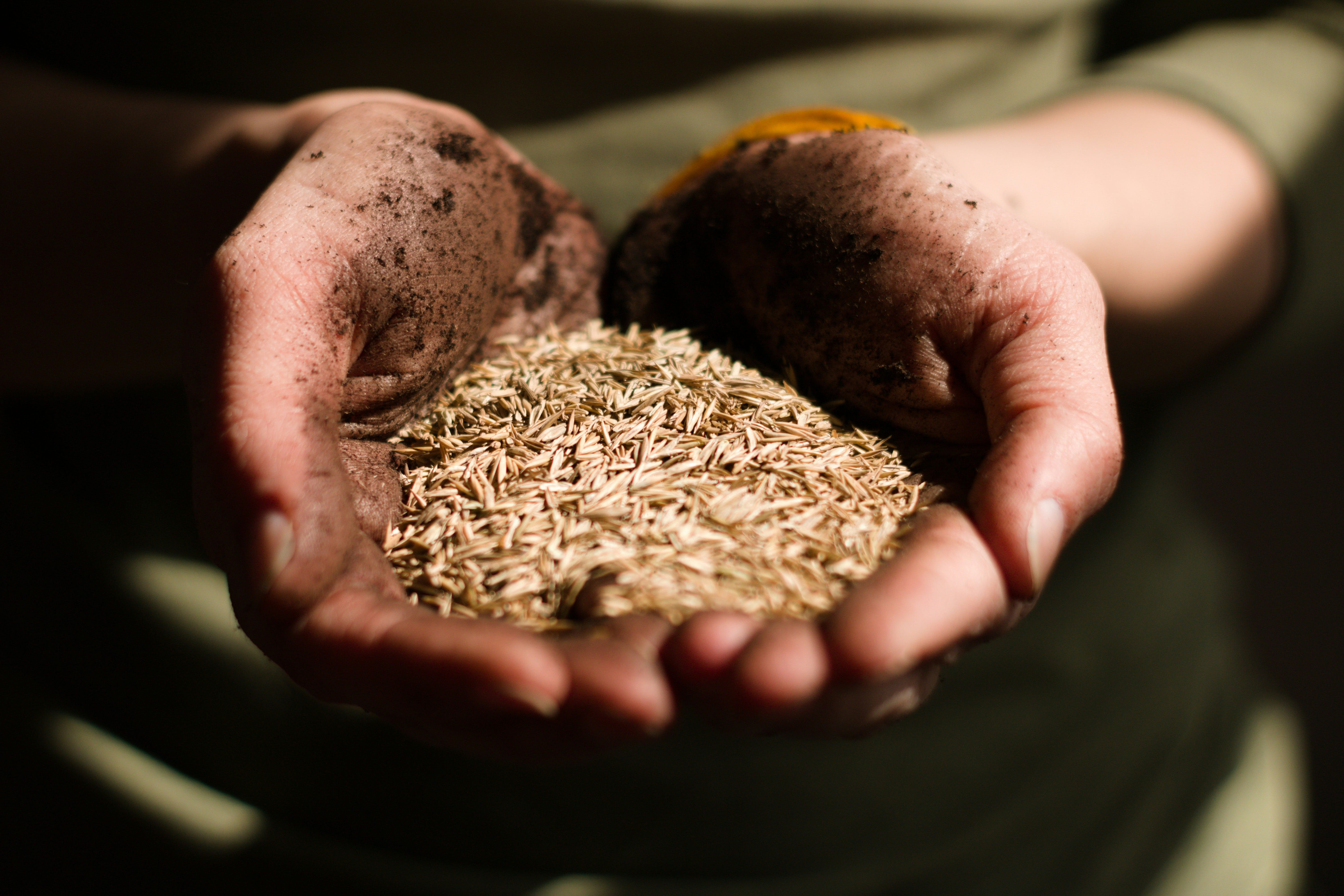
“Those who sow in tears shall reap with shouts of joy! He who goes out weeping, bearing the seed for sowing, shall come home with shouts of joy, bringing his sheaves with him.”
— Psalm 126:5–6
The longer you live, the more you realize that Moses wasn’t exaggerating when he referred to the short span of our lives as “toil and heaviness.” Nor were the poets simply exercising artistic wit when they termed this life a “vale of tears.” Despite what the secularists will tell you (and your own sinful heart, for that matter), this world really is fallen, and fraught with all manner of disappointment, tragedy, heartbreak, and pain.
You tend to take little notice of this when you’re young. Suffering, if it enters your life at all, usually comes like a thunderstorm—quick and severe, but soon dissipating and leaving in its wake the warmth and light one gets used to thinking of as “normal life.” A few decades later, however, and suffering takes on a very different character, more like a fog, settling into every crack and crevice and becoming more of a permanent fixture than a passing mood. This is when suffering becomes truly difficult, when it becomes that “toil and heaviness.” This is also when suffering becomes most dangerous, bringing with it all kinds of temptations toward bitterness and despair.
The Bible is no stranger to this dilemma, however. Indeed, the Bible gives language and expression to our suffering that is far deeper and more robust than anything the world has to offer. In place of therapy and spa days, which contain all the sturdiness of an umbrella in a hurricane, the word of God gives us truth, addressing both the weight and sting of suffering, but also its transience, and, even more helpfully, its purpose.
Suffering, Scripture reminds us, is never random, because the world is not random. Rather, suffering is, as John Flavel put it, God’s “workman,” accomplishing precisely what He, the wise Physician, intends. Further still, the Bible reminds us that God has put an expiration date on mourning and crying and pain (Rev. 21:4). As astonishing as it is to say, these things which feel so permanent now will one day be the “former things that have passed away.” Praise His holy name!
But that still leaves us with the difficult question: “What do we actually do until that day?” What do we do when suffering, pain, and anguish enter our lives and become, not brief acquaintances, but constant companions?
The above Psalm contains the answer. We do not, as the world does, either wilt under the pressure or vainly try to block suffering out with ingenious but ultimately futile schemes. Instead, we soldier on. We let the tears run down our cheeks while at the same time taking up our seed for sowing, and we sow in hope. We fix our eyes resolutely on that empty tomb—that blessed symbol of future glory!—and we remember that our Saviour Christ Jesus has “abolished death and brought life and immortality to light through the gospel” (2 Tim. 1:10).
There is coming a day when God will restore the fortunes of Zion: when our mouths will be filled with laughter and our tongues with shouts of joy (Ps. 126:2). In that day, we who have gone out weeping will come home with shouts of joy, bringing our sheaves with us, and we will share in resurrection life forever. That day has not yet come, but the promise of it has. And believing that promise is the secret to the apostle’s words, “sorrowful yet always rejoicing.”
May God give us grace to be just these kinds of saints, sowing expectantly, with tears, but always looking eagerly toward eternity, when the One seated on the throne will make all things new.
Thank you for this. I read the opening with a bit of caution (the "vale of tears," "toil and heaviness" language has a history of being used, in certain sovereignty-and-predestination-heavy circles, to tip into a stoic or pietistic submission to suffering, the physical quietly demoted beneath the spiritual, this life something to sit loose to rather than grieve and love at once). But you don't actually go there. The Psalm keeps you honest: sowing in tears and sowing, not despite hope but by means of it. "Sorrowful yet always rejoicing" is the opposite of resignation.
The one thing I'd still want named alongside the toil-and-heaviness frame is the goodness of this life itself; not just as a burden to be endured until glory, but as gift, worth grieving the loss of precisely because it was good. Without that, readers already prone to a Gnostic instinct might hear permission to disengage rather than an invitation to sorrow well. You clearly don't mean that — but the language you're borrowing sometimes carries it in.
I appreciate the balanced perspective you offer here. It's a rare piece that holds grief and hope together without letting either one swallow the other.